The Small Houseplant Manual
A practical field guide to keeping, propagating and finding useful houseplants.
You do not need a greenhouse to grow things. A windowsill, an old jar, a handful of soil and a plant that does not mind being forgotten will take you surprisingly far.
This manual is about useful houseplants: plants that tolerate ordinary spaces, require little attention, are easy to propagate, and can be obtained without spending (much) money.
The objective is not to build a collection of rare specimens. Just keep a few plants. Learn how they work and grow. Propagate them and give the surplus away.
The Good Plants
The following plants are forgiving, easy to find, and most can be propagated with little more than a glass of water.
| Plant | Light | Water | Propagation | Suitable for |
|---|---|---|---|---|
| Spider Plant | Low → bright indirect | Moderate | ★★★★★ | Beginners, shelves, hanging pots |
| Pothos | Low → bright indirect | Low → moderate | ★★★★★ | Shelves, hanging pots |
| Snake Plant | Low → bright | Low | ★★★★☆ | Bedrooms, hallways, offices |
| ZZ Plant | Low → bright | Very low | ★★★☆☆ | Darker rooms |
| Tradescantia | Bright indirect | Moderate | ★★★★★ | Windowsills, hanging pots |
| Chinese Money Plant | Bright indirect | Moderate | ★★★★☆ | Windowsills |
| Jade Plant | Bright | Low | ★★★★☆ | Sunny windowsills |
| Rubber Plant | Bright indirect | Moderate | ★★★☆☆ | Larger rooms |
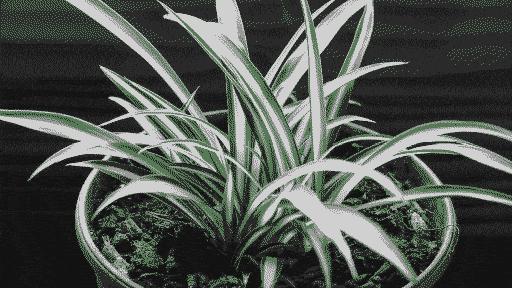
Spider Plant
Chlorophytum comosum
A reliable old houseplant. Spider Plants tolerate a surprisingly wide range of conditions and produce long stems carrying small plants of their own.
This makes them particularly useful if the objective is to turn one plant into many.
Why keep one?
- Easy to grow
- Tolerates lower light
- Produces many plantlets
- Easy to propagate
- Works well in hanging pots
- Usually inexpensive to obtain
Propagation
Wait until one of the small plantlets has developed roots.
Then:
cut → water → roots → pot
Alternatively, place the plantlet directly into moist potting compost.
One healthy Spider Plant can eventually produce enough offspring to fill a windowsill.
Pothos
Epipremnum aureum
A trailing plant with a useful habit of escaping from shelves and cupboards.
Pothos tolerates relatively low light and does not object to being forgotten occasionally.
It is also one of the easiest plants to propagate from stem cuttings.
Propagation
Find a healthy section of stem.
Cut just below a node.
Remove the lower leaves.
Put the cutting in a glass of water.
Wait.
Roots will eventually appear.
Once the roots are established, plant the cutting in compost.
One vine can become several plants.
Snake Plant
Dracaena trifasciata
Formerly known as Sansevieria.
Thick leaves. Slow growth. Very little water.
This is the plant for the person who occasionally remembers that they own plants.
Good locations
- Bedroom
- Hallway
- Office
- Shelf
- A relatively dark corner
Allow the soil to dry between waterings.
The principal danger is not neglect.
It is kindness.
Too much water is considerably more troublesome than too little.
ZZ PLANT
Zamioculcas zamiifolia
A useful plant for places where many other houseplants would struggle.
The ZZ Plant stores water in thick underground rhizomes and can therefore tolerate long periods without watering.
Good locations
- Office
- Hallway
- Living room
- Shelf
- Rooms with limited daylight
It grows slowly.
This is not a defect.
Less growth means less pruning, less repotting and fewer problems to solve.
06 / TRADESCANTIA
Tradescantia
If the objective is to make many plants from one plant, Tradescantia deserves a place near the front of the greenhouse.
Cut a stem.
Remove the lower leaves.
Put it in water.
Wait for roots.
Plant it.
The remaining plant will usually continue growing and provide more material for cuttings.
The propagation cycle
ONE PLANT
    │
    ├── cutting
    │
    ▼
  ROOTS
    │
    ▼
 NEW PLANT
    │
    └── more cuttings
This is about as close as a household gets to a small plant factory.
07 / OTHER USEFUL PLANTS
Not every plant needs to be a propagation machine.
Some are simply useful because they are attractive, long-lived or well suited to a particular place.
Chinese Money Plant
Pilea peperomioides
Pannenkoekenplant
Produces offsets around the parent plant and is therefore easy to share.
A good windowsill plant with a simple, distinctive shape.
Jade Plant
Crassula ovata
A succulent for a bright windowsill.
Needs little water and can be propagated from leaves or stem cuttings.
Rubber Plant
Ficus elastica
A larger plant for rooms where there is enough space.
Likes bright, indirect light and can become a substantial indoor plant over time.
08 / LIGHT
Light is usually more important than fertilizer.
A plant standing in the wrong place cannot be persuaded to thrive by giving it more food.
Bright light
Usually found:
- Near a south-facing window
- Near a west-facing window
- On a bright windowsill
Suitable for plants such as Jade Plant and many succulents.
Bright indirect light
Usually:
- Near a window
- Behind a thin curtain
- A little away from direct sunlight
A good general location for many houseplants.
Low light
Examples include:
- Hallways
- North-facing rooms
- Shelves away from windows
Low light does not mean no light.
There must still be enough daylight for the plant to function.
09 / WATER
Do not water plants because it is Tuesday.
Check the soil instead.
Push a finger into the top few centimetres.
Damp?
Leave it alone.
Dry?
Water it.
When watering, water thoroughly and allow the excess to drain away.
A pot sitting permanently in water is not a miniature pond.
It is a root problem waiting to happen.
A useful rule
Too little water is often recoverable.
Too much water is often not.
Plants with thick leaves or underground storage organs, such as Snake Plants, ZZ Plants and many succulents, generally need considerably less water than thin-leaved plants.
10 / POTS & CONTAINERS
A plant does not care whether its pot came from a garden centre.
It cares about:
- drainage
- enough room for its roots
- suitable soil
- reasonable stability
Useful containers can often be found around the house.
Try:
- yoghurt pots
- food containers
- old mugs
- glass jars
- tins
- takeaway containers
- nursery pots from previous plants
Drainage
If the container is intended to hold the plant directly, make sure excess water can escape.
If a container has no drainage hole, use it as a decorative outer container and keep the plant in a smaller nursery pot inside it.
This also makes watering easier.
The expensive pot is optional.
The drainage hole is not.
11 / THE SECOND-HAND GREENHOUSE
Before buying a new pot, look around.
Good sources include:
- thrift shops
- flea markets
- garage sales
- plant swaps
- friends and neighbours
- local giveaway groups
Old cups, bowls and containers can often be turned into perfectly respectable plant pots.
They do not have to match.
In fact, they probably shouldn’t.
A greenhouse assembled from useful things is generally more interesting than one assembled from a catalogue.
12 / THE PROPAGATION DESK
You do not need a laboratory.
A small propagation station can be assembled from ordinary household objects.
PROPAGATION KIT

[ ] sharp scissors
[ ] glass or jar
[ ] water
[ ] small pots
[ ] potting compost
[ ] healthy parent plant
The basic cutting
01 Choose a healthy stem.
02 Cut just below a node.
03 Remove the lower leaves.
04 Place the cutting in water or suitable compost.
05 Keep it somewhere bright, away from strong direct sunlight.
06 Wait.
07 Plant it when the roots are established.
Do not pull the cutting out every day to inspect the roots.
Plants are not particularly impressed by inspections.
Give them time.
13 / WHICH ROOM?
Different rooms provide different conditions.
Windowsill
Good for:
- Jade Plant
- Pilea
- Spider Plant
- Tradescantia
Living room
Good for:
- Pothos
- Rubber Plant
- Spider Plant
- ZZ Plant
Bedroom
Good for:
- Snake Plant
- Spider Plant
- ZZ Plant
Bathroom
Potentially good for:
- Spider Plant
- Pothos
- Tradescantia
- Some ferns
Humidity can be useful, but light still comes first.
A dark bathroom is still a dark bathroom.
14 / HEAT
Keep plants away from direct heat.
Radiators, heaters and other heat sources can dry out the surrounding air and the soil much faster.
A useful arrangement is:
window → plant → room
rather than:
radiator → plant
Do not place a plant directly above a radiator simply because there happens to be an empty shelf there.
The plant has already considered this arrangement and voted against it.
15 / FEEDING
Houseplants need nutrients, but fertilizing is not a substitute for good growing conditions.
A plant that receives too little light will not become healthy simply because it receives more fertilizer.
For most ordinary houseplants:
light + water + drainage + suitable soil
come first.
Fertilizer is further down the list.
During active growth, a suitable general houseplant fertilizer can be used according to its instructions.
When growth slows during the darker months, reduce feeding accordingly.
16 / AIR & THE HOUSE
Houseplants are often described as air-purifying plants.
There is some truth behind the idea that plants can absorb certain compounds under controlled conditions.
But a normal living room is not a laboratory.
You would need an impractical number of plants to use houseplants as a meaningful replacement for ventilation.
So keep plants for better reasons:
- They bring greenery indoors.
- They make rooms feel more alive.
- They provide a small connection with growing things.
- They can increase humidity slightly through transpiration.
- They are enjoyable to propagate.
- They give you something to look after.
- And, occasionally, they provide a cutting for a friend.
For actual indoor air quality:
open a window.
17 / THE CHEAPEST PLANT SHOP
You already have one.
It is called:
somebody else’s windowsill.
A cutting costs nothing.
A glass costs almost nothing.
A reused pot costs nothing.
Compost is inexpensive.
And suddenly one plant becomes five.
Five become twenty.
Twenty become gifts.
Ask for cuttings
Friends, family and neighbours may already have plants producing more cuttings or offsets than they need.
A Spider Plant with a collection of baby plants is effectively advertising.
Take one.
Give it a home.
Start again.
18 / A SMALL GREENHOUSE KIT
You do not need much.
GREENHOUSE KIT

[ ] sharp scissors
[ ] 3–5 small pots
[ ] peat-free potting compost
[ ] glass or jar
[ ] watering can
[ ] one healthy parent plant
That is enough to begin.
The rest can be acquired gradually.
19 / THE GREENHOUSE RULE
Do not buy a plant because it looks good in the shop.
Choose it because it will be happy where you intend to put it.
Light first.
Water second.
Pot third.
Looks fourth.
This one rule prevents a surprising amount of dead greenery.
FINAL NOTE
A houseplant does not need to be rare.
It does not need an expensive pot.
It does not need a carefully calculated feeding schedule.
And it certainly does not need to look like the photograph on the label.
A healthy plant that has survived several winters on a windowsill is already doing a respectable job.
Keep it alive.
Take a cutting.
Give one away.
Plant the next one.
The greenhouse is never finished.